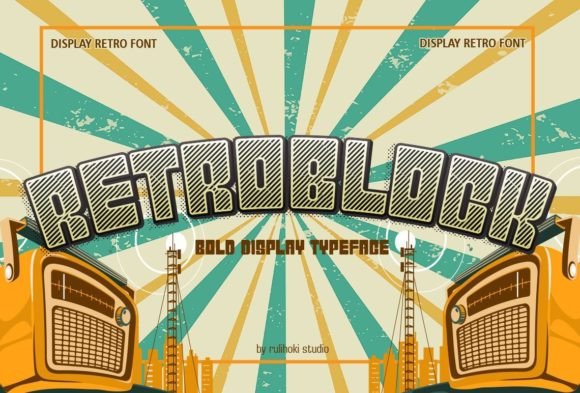
Bringing Nostalgia to Modern Branding with Retroblock
I was staring at a blank brand board one morning, sipping my coffee and trying to find the right visual language for a local bakery called “Sweet Hearth.” The client wanted something warm, inviting, and slightly vintage. I had tested several fonts, but none quite hit that sweet spot until I stumbled upon Retroblock.
Retroblock is a bold spectacular display font. It reads as strong, confident, and dynamic, which immediately caught my attention. Its blocky yet playful structure brought a nostalgic character to the table—something that felt like a throwback to classic signage but still fresh enough for modern branding.
A Font That Speaks Volumes
The first thing I noticed about Retroblock was how it commanded space. Each letter was designed with intention—sharp edges, thick strokes, and subtle curves that gave it a sense of movement. It wasn’t just a font; it was a mood. It exuded joy, energy, and a touch of old-school charm that perfectly aligned with the bakery’s concept.
I started by testing it on a logo draft. The word “Sweet Hearth” in Retroblock felt like a big, warm hug. It had that retro feel without being outdated. It worked well as a headline font, making the brand name stand out against softer background elements.
From Logo to Packaging: A Versatile Display Font
Once the logo was set, I moved on to packaging mockups. Retroblock looked fantastic on product labels, especially when paired with a clean sans-serif font for supporting text. The contrast between the bold display font and the minimalist body copy created a clear visual hierarchy that made everything easy to read and visually appealing.
I also used Retroblock on social media graphics and posters. On Instagram posts, it added a punchy, eye-catching element to promotional content. For flyers, it helped draw attention to key messages like “New Arrivals” or “Special Offers.”
One of my favorite applications was on the shop sign. The bakery owner loved how Retroblock made the storefront look inviting and memorable. It wasn’t just a font—it was part of the brand’s personality.
Design Considerations and Practical Advice
While Retroblock is a display font, I found it worked best for short-form text rather than long paragraphs. It’s not ideal for body copy due to its bold nature, but it shines when used sparingly for headlines, taglines, or call-to-action buttons.
For font pairing, I paired Retroblock with a light sans-serif font like Helvetica Neue for a balanced look. The combination felt professional yet approachable. If you want a more creative edge, a script font can be a nice accent, though I’d recommend using it sparingly to avoid overwhelming the design.
Before committing to Retroblock for a full brand system, I suggest testing it across different mediums. How does it look on a business card? Does it render well on digital screens or printed materials? These are all important questions to consider before finalizing your brand identity.
Also, checking the font’s included styles, alternates, ligatures, weights, multilingual support, and file formats is crucial, especially if you're working on an international project. Make sure the licensing allows for commercial use if you're creating assets for clients.
Real-World Applications and Recommendations
Retroblock isn’t just limited to logos and packaging. It has potential in editorial design too. I used it in a magazine layout for a feature on vintage baking techniques, and it helped create a cohesive, nostalgic theme throughout the piece.
In web design, Retroblock worked well as a hero section header. It added a sense of urgency and excitement to promotions or new product launches. Just remember to ensure there’s enough contrast with the background to maintain readability.
For merchandise, like t-shirts or mugs, Retroblock added a fun, collectible feel. It’s perfect for brands looking to stand out in a crowded market while maintaining a unique visual identity.
If you're a designer looking for a premium font that brings nostalgia and energy into your projects, Retroblock is worth exploring. It’s versatile, expressive, and capable of transforming even the simplest design into something memorable.
Whether you’re working on a small café, boutique, skincare brand, or any other creative project, Retroblock can be the spark that turns your design from good to unforgettable.